
What is Particle Size Distribution D50, D50 Particle Size Distribution
What is Particle Size Distribution D50, D50 Particle Size Distribution
- Particle Size Distribution D50 is also known as median diameter or medium value of particle size distribution, it is the value of the particle diameter at 50% in the cumulative distribution. Particle Size Distribution D50 is one of an important parameter characterizing particle size. For example, if D50=5.8 um, then 50% of the particles in the sample are larger than 5.8 um, and 50% smaller than 5.8 um. D50 is usually used to represent the particle size of group of particles. Particle size distribution test results by laser diffraction principle
- Particle size distribution is the number of particles that fall into each of the various size ranges given as a percentage of the total number of all sizes in the sample of interest. A particle size analyzer is being used to measure particle size of particles.
- Usually we use following three methods to characterize particle size distribution such as Table: percentage of particles from the total within a size range;it includes differential distribution and cumulative distribution. Figure: particle distribution by histogram and curves, etc. Function: particle distribution functionally including R-R distribution and normal distribution
- D50 is also named x50 or Dx50 particle size according to some ISO standards or user’s tradition.
- When we speak of D50 we mean cumulative particle size distribution D50. In the cumulative particle size distribution graph(curve), the ordinate represents the cumulative particle size distribution 0% to 100%, the abscissa represents the particle size, now find the cumulative distribution 50% on the ordinate, its corresponding particle size value in ordinate is D50.
- How to calculate D10 D50 D90. D50 is also divided into Dv50, Dw50 and Dn50, Dv50 means volume D50, whereas Dw50 is mass D50 and Dn50 is number D50. Dv50 is also known as volume median or volume average particle size, it physically represents that each volume of particles greater or smaller than such value takes account of 50% of the total particles volume. Dn50 is known as number median, it physically represents that each number of particles greater or smaller than such value takes account of 50% of the total particles number.
- When we speak size, we mean size of a single particle; when we say particle size distribution, we mean size distribution of particle system.
- Particle system is made up of many particles. In case all the particles making up particle system have same or almost same particle size we call such particle system Monodisperse however in case the particle system is made up of particles different in size, we call it Polydisperse. Size of particle system or particle diameter distribution means the regularity of the sizes of all the particles.
- Actually particle size distribution in particle system is not continuous strictly speaking, however when we are speaking a large amount of measured particles, we can say it is continuous. The size distribution of polydisperse particle system made up of particles in different sizes is divided into Unimodel and Multimodel.
- There are many methods representing the particles system particle size distribution. There are two methods physically that is number distribution and volume distribution.
- The relationship of particle size number distribution N(D) and particle size volume distribution V(D) is
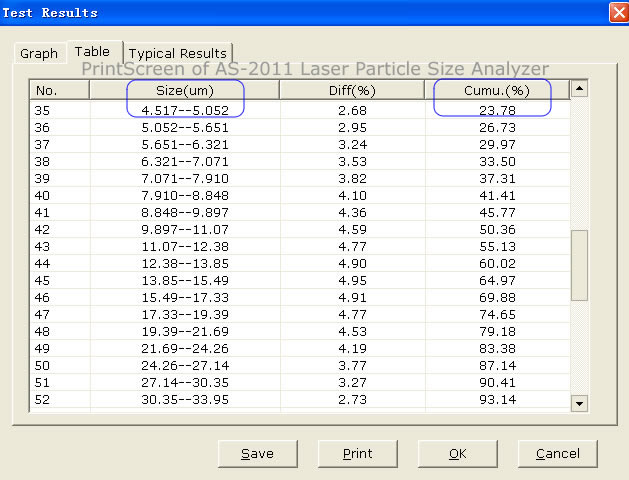
- In a Malvern Mastersizer Result Analysis Report of Particle Size Analyzer the D50 is represent as D(0.50)
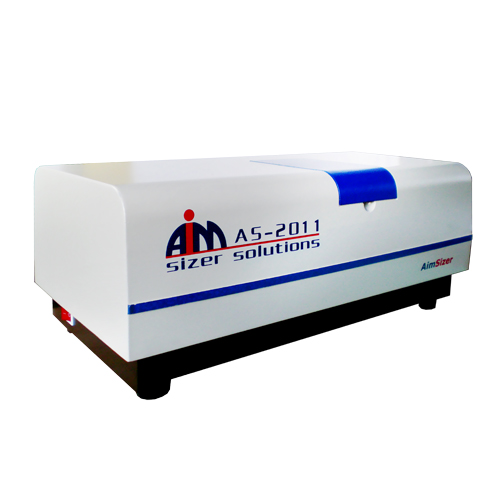
AS-2011 Laser Particle Size Analyzer measures 0.1-500um
- D represents the diameter of powder particles, and D50 means a cumulative 50% point of diameter (or 50% pass particle size); D10 means a cumulative 10% point of diameter; D50 is also called average particle size or median diameter; D (4, 3) means volume mean diameter, and D (3, 2) means plane mean diameter. Powder particle size is called particle granularity. Because of complicated particle shapes, they are usually divided into such several representing methods as sieve size, sedimentation size, equivalent volume size, and equivalent surface area size. Sieve size shows that particles can pass through the mesh size of screen cloth. It is represented by the mesh number in the screen cloth with 1-inch (25.4 mm) width, and thus it is called “mesh number”.
- Is it possible d50 value is less than d10, if so what could be the reason?
- D50 is cumulative data, 50 means upto 50% percent of the total particles.If D50=5um, it means 50% of particles smaller than 5um and 50% bigger than 5um. D10 is also cumulated data, 10 means upto 10% percent of the total particles. If D10=3um, it means 10% of particles smaller than 3um. As you know we show particle size from smaller to bigger, from 0 to 3um, 3um to 5um, then bigger and bigger.As a result the D50 value is always bigger than D10. You can treat particle size value as a mesh aperture size,all the particles smaller than such aperture falls down and pass through the mesh aperture, this is so called undersize, the particle size distribution is based on undersize. If you think so, it would be easier to understand. Particle size distribution is not a single point value, it is more rich data, it is a distribution.
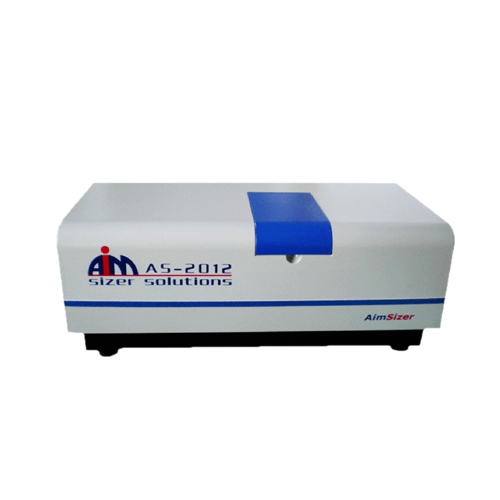
AS-2012 Laser Particle Size Analyzer measures 0.04-500um
- ISO 13317-1-2001 Determination of particle size distribution by gravitational liquid sedimentation methods – Part 1: General principles and guidelines
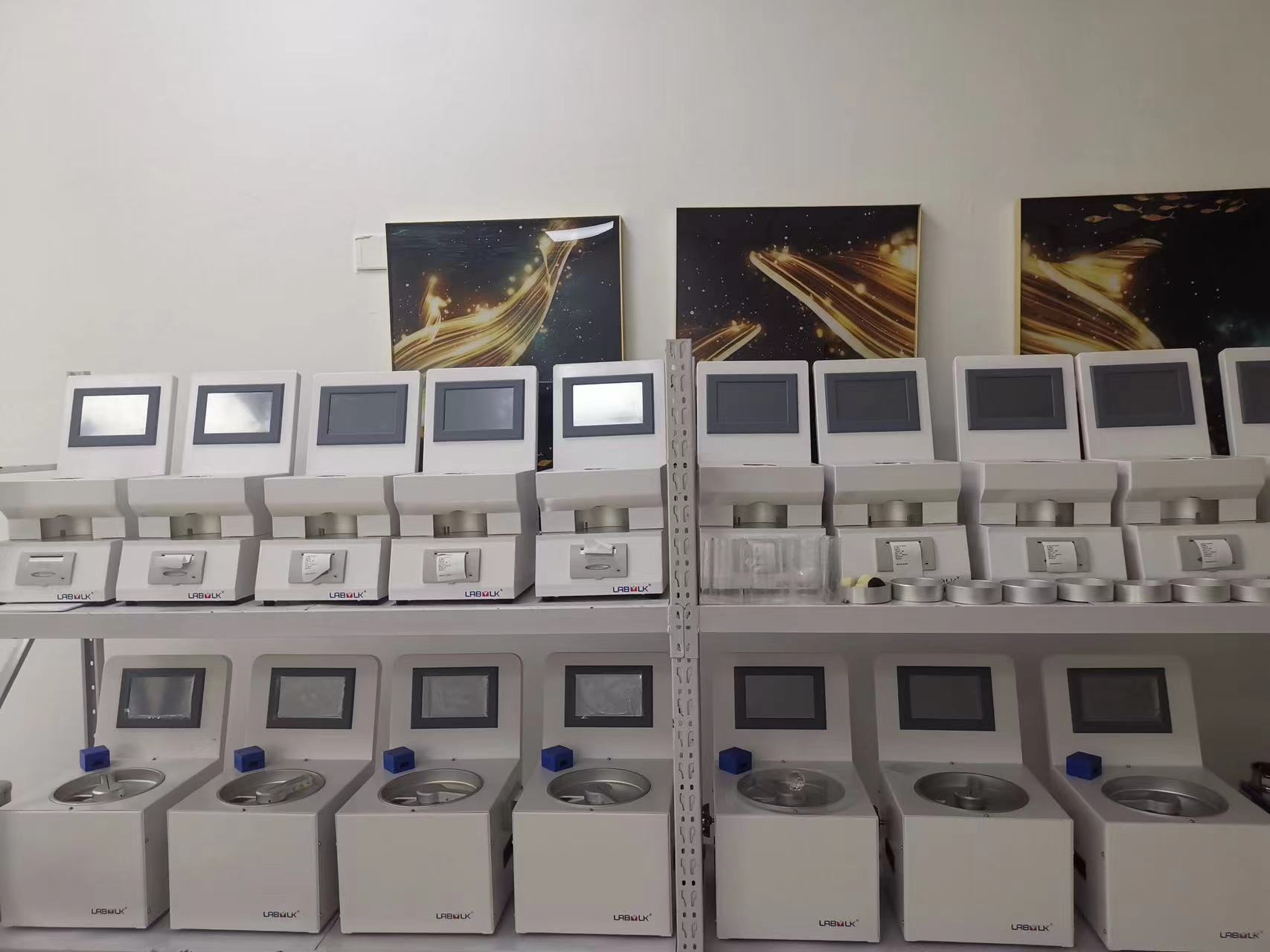
AIR-200 Air jet sieve
Particle Size D50 https://www.aimsizer.com